Use case
TikTok Shop videos: how sellers and affiliates make product videos that sell
A TikTok Shop video sells when it hooks in the first seconds, shows the product being used, makes one honest claim and ends with a clear offer. Sellers and affiliates who do well post many variations of that formula and keep the ones buyers respond to.
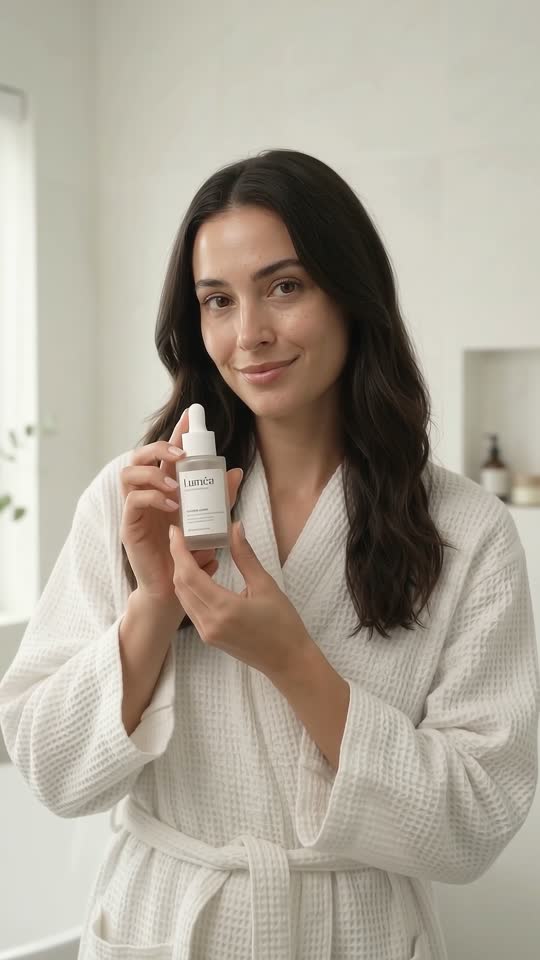
What makes a product video sell on TikTok Shop
Shoppers in the For You feed are not searching. They are scrolling, and your video has to earn the next second before it can earn a sale. TikTok Shop’s own guidance for creators describes this shape: a product-related hook in the first three to six seconds, a middle that shows the benefit, and a call to action that is easy to follow. Four things do most of the work.
- Hook in the first seconds. Open on the product, the problem it solves or the result. Not on an introduction. “I stopped buying paper towels” beats “Hi everyone, today I want to show you”.
- Show the product in use. Hands, texture, the moment it does its job. A product held still next to a face is a listing photo with sound.
- One claim per video. Decide which single benefit this video proves, then prove it on screen. A video that lists six features convinces nobody of any of them.
- A clear offer at the end. What to tap, what the deal is (a bundle, a voucher, a launch price) and why now. Keep the offer inside what your shop is actually running.
Everything else, from music to captions, supports those four. If a video is not selling, check them in that order before you change anything else. For the broader craft of hooks and openings, see short video ideas.
A batch of angles for one product
A product does not have one video. It has a set of angles, and each angle deserves its own hook and its own test. Here is a batch that works for almost any physical product, with the opening pattern and when it tends to fit.
| Angle | How it opens | Fits best when |
|---|---|---|
| Problem / solution | “My kitchen sponge smelled after two days, until…” | The product fixes a familiar daily annoyance |
| Discovery | “I found this and had to try it” | New or unusual product, low awareness |
| Comparison | Old way vs. this way, side by side | It replaces a habit or a cheaper workaround |
| Tutorial | Three steps, product in hand | How to use it is not obvious from the packaging |
| Honest review | What it does well, and one thing it does not | Higher price, skeptical buyers |
| Unboxing | Packaging, first touch, first use | Gift-able or visually satisfying products |
| Offer | Today’s bundle or voucher, said once, clearly | A live promotion, a mall campaign, payday week |
| Testimonial-style | A creator’s routine with the product in it | Beauty, home, wellness. Fact-based only, see the policy section |
Use the same product facts under all of them. Only the framing changes, which is what makes a batch fast to produce and easy to keep honest.
Why sellers post many variations
The uncomfortable truth of TikTok Shop is that nobody knows in advance which hook will work for which product. Each video gets its own chance in the feed, so a small account can sell with the right clip and a large one can post a dud. The practical answer is volume with structure, not volume for its own sake.
- Change one thing per variation. Hook, angle, first shot or offer. Change all four and you learn nothing from the result.
- Post a set, not a single. Several variations of one product across a week tell you more than one polished video.
- Read the signals that matter for selling. Watch time on the first seconds, taps on the product card, orders. Likes are not the goal.
- Keep the winner’s structure and rotate the rest. When one hook works, write the next batch around it and test the second claim.
This is also why affiliates who promote several products need a routine rather than inspiration. Five products with four angles each is twenty scripts. The workload is a calendar problem before it is a creative one.
What TikTok Shop content policy forbids
A video that sells but breaks the rules gets removed and costs violation points, and enough points take selling features away from the shop or the creator account. The details differ slightly by country, so read the policy for your market, but the pattern is consistent.
- Misleading or exaggerated claims. Every claim must match the product listing and be supportable. No guaranteed results, no “cures”, no invented numbers.
- Before/after that is not representative. Transformations edited with filters, or results a typical buyer would not get, are prohibited. Where before/after is allowed, it has to be honest and typical.
- Health and medical claims. Cosmetics, supplements and devices cannot claim to diagnose, treat or prevent a condition. A product that claims a medical use needs the approval your country’s regulator requires.
- False scarcity and fake discounts. “Only two left” and “half price today” must be true for the actual listing and period.
- Prohibited products. Tobacco and vapes, weapons, drugs, counterfeit goods and the other categories on the prohibited list cannot be sold or promoted in any video or LIVE.
- Other brands. Do not sell a product as a dupe of a named brand, and do not use a competitor’s name to get attention.
- Undisclosed commercial relationships and unlabeled AI. Say that you earn a commission where the platform and local law require it, and label AI-generated material where TikTok asks for it.
The official pages are the Prohibited Products Policy, How to avoid misleading content the Affiliate Marketing Policy and the Creator Enforcement Policy, which explains violation points, in TikTok Shop Academy. These are the US editions; the Academy for your country carries the local version. Policies change, so check them before a campaign, not after.
Start from a product fact sheet
The cheapest way to stay compliant and still post daily is to write the facts down once. One page per product, kept next to your scripts:
- What it is: materials, size, what is in the box.
- The benefits you can prove, from the listing, the label or your own use.
- Claims you may not make, in your own words: no medical promises, no “best”, no results you cannot show.
- Who it is for and what they are doing at the moment they need it.
- The current offer, with its dates.
Every script, variation and caption is then checked against that sheet. A creator who films for you gets the sheet instead of a briefing call, and an affiliate who promotes your product knows what not to say.
Where Velysaro’s Promote a product flow fits
Velysaro is built around exactly that sheet. In the Promote a product flow you enter the verified product facts, benefits, allowed and prohibited claims, audience and offer. Velysaro then writes creator-style UGC angles for that product and market (problem/solution, comparison, discovery, testimonial-style, offer), gives you hooks to pick from for each, writes the script and renders a finished vertical video with visuals, voice, captions and music in your content language.
- Grounded in your facts. The scripts use what you entered. Velysaro does not invent testimonials or claims.
- Variations without reshooting. One product, several angles, each rendered as its own video.
- Scene-level fixes. If one scene shows the wrong thing, regenerate that scene, not the whole video.
- Week planning. Put the variations on days, batch-render the week, then download and post from your own account.
Velysaro does not connect to TikTok Shop. You download the finished videos and post them yourself, so the product card, the affiliate link and the disclosure stay under your control. Content languages at launch are English, Bahasa Indonesia, Latin American Spanish, Spain Spanish, Brazilian Portuguese, European Portuguese, Arabic, Malay, Turkish, Vietnamese, Filipino, French, German, Italian, Hindi, Russian, Ukrainian and Korean, with hooks and examples made for each market. Velysaro is pre-launch and opening in batches. See pricing and the examples, or read how the AI UGC video generator works in more detail. If you promote products without showing your face, the faceless video generator guide covers that setup.
Frequently asked questions
How long should a TikTok Shop video be?
Long enough to show the product doing its job and state the offer, which for most products is well under a minute. The first three to six seconds matter most: TikTok Shop’s creator guidance calls for a product-related hook in that window. Cut anything before the hook and anything after the call to action.
Do I need to show my face in TikTok affiliate videos?
No. Hands-only demos, voice-over with product shots and screen-style tutorials all sell, as long as the product is shown in use and the claim is clear. Face-on creator videos help with trust for higher-priced items. The faceless video generator guide covers the no-face setup.
How many product videos should I post per week?
Enough to test something. A useful minimum is a small set of variations of one product across a week, changing one element at a time, rather than a single video per product. Keep the structure of what works and rotate the rest the following week.
Can I use AI-generated videos for TikTok Shop?
Yes, under the same content rules as any other video: claims must be true and supportable, the product must be shown accurately, and AI-generated or synthetic material must be labeled where TikTok requires it. Velysaro grounds every script in the product facts you enter and does not invent testimonials, which makes it easier to keep generated UGC inside the policy. You still review each video before you post it.
What claims are not allowed in TikTok Shop videos?
Anything you cannot support from the listing or evidence: guaranteed results, medical or health promises for cosmetics and supplements, before/after that is edited or not typical, fake scarcity and fake discounts, and comparisons that trade on another brand’s name. Prohibited products such as tobacco, vapes, weapons and counterfeits cannot be promoted at all.
Do I have to say that I earn a commission?
In most markets, yes. TikTok’s affiliate and branded content rules, and consumer protection law in the US, Brazil, Mexico and elsewhere, expect a clear disclosure near the recommendation, in plain words rather than a buried hashtag. When in doubt, say it on screen and in the caption.
Last updated: